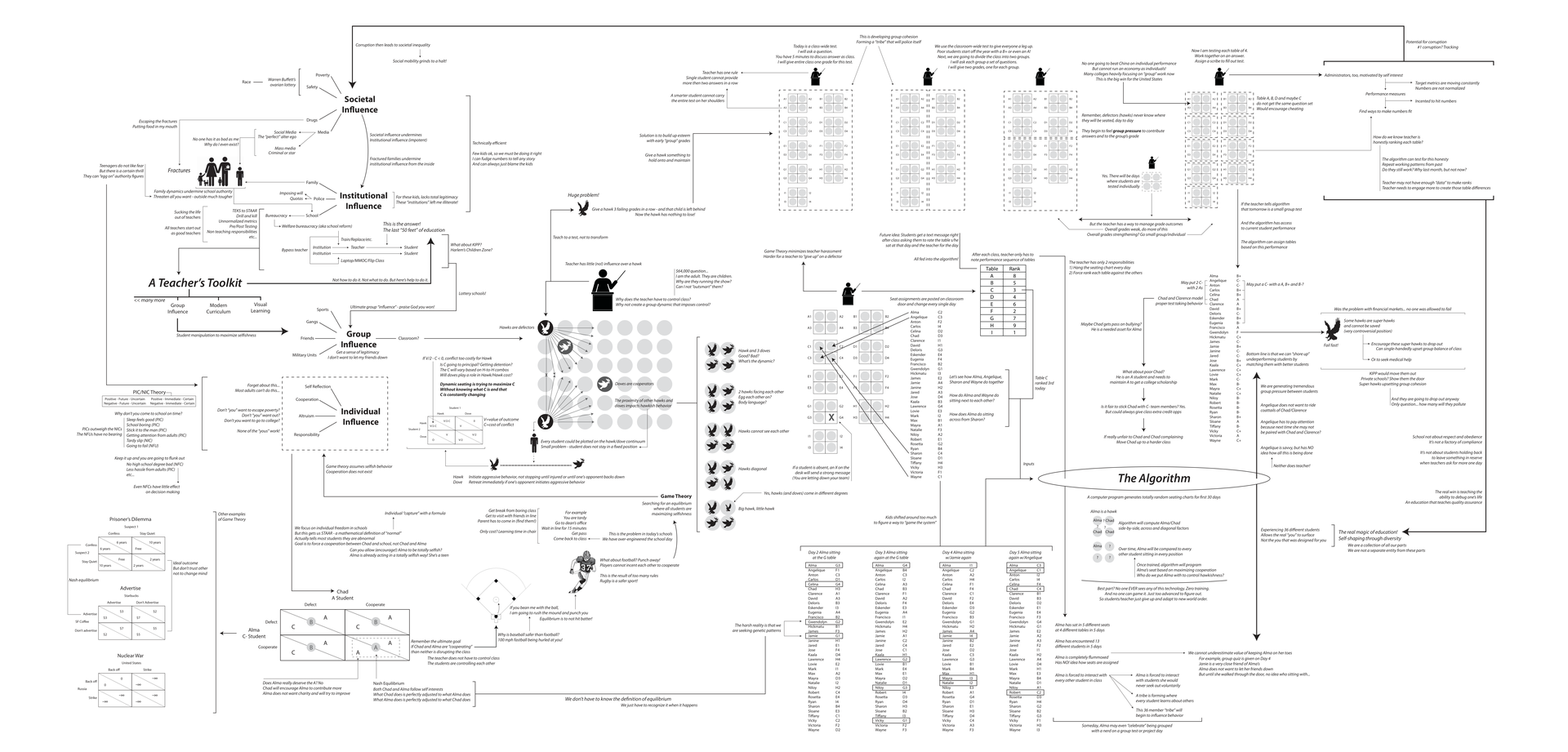
The Architecture of Societal Control:
This intricate systems map exposes how societal, institutional, and group influences converge to govern individual student behavior. By analyzing classrooms through the lens of structural control, the document illustrates how systemic pressures dictate social dynamics, potentially fracturing natural communities in favor of standardized, institutionalized compliance frameworks that prioritize administrative ease over genuine human connection.
|
Algorithmic Social Engineering:
At the heart of the system lies an algorithmic engine designed to engineer classroom environments. By dynamically rotating seating charts, the algorithm aims to neutralize disruptive behaviors and optimize cooperative dynamics. This structured approach raises critical questions about the ethical implications of using automated tracking systems to force social compliance and mold young student identities.
|
Game Theory and Behavioral Design:
The document heavily utilizes behavioral game theory to map student interactions, modeling classroom dynamics through classic strategic matrices. This framework conceptualizes students as strategic actors, suggesting that peer relationships can be systematically managed. Ultimately, it highlights a profound tension between cultivating authentic, organic human growth and enforcing calculated, mathematically engineered behavioral control systems.
|