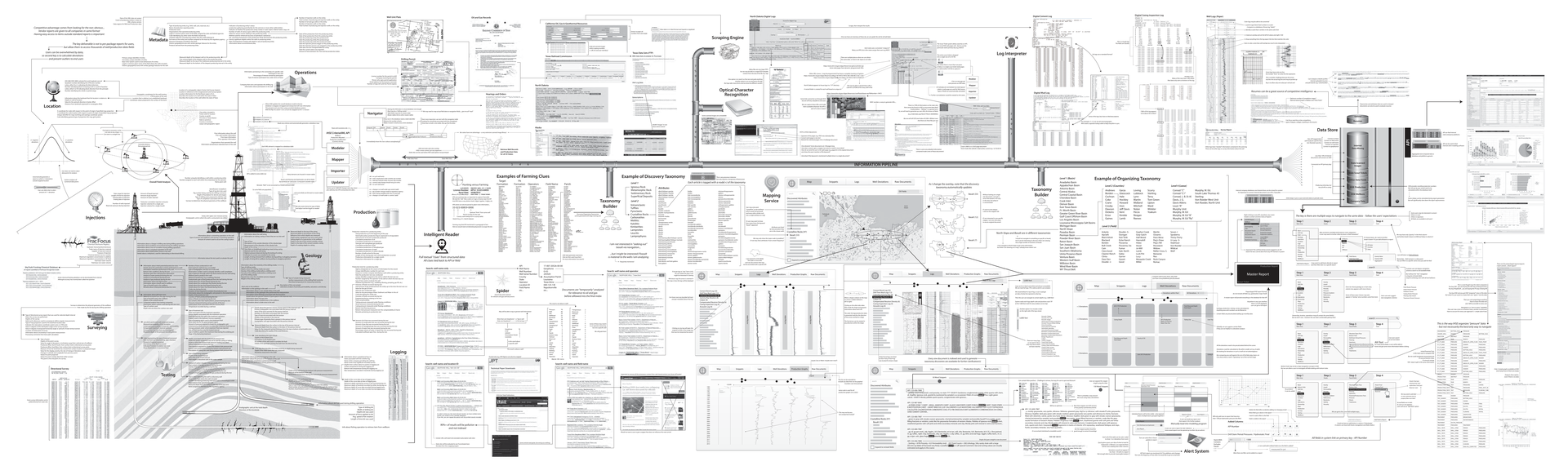
Unifying Raw Physical and Spatial Assets:
The architecture begins by digitizing a vast array of fragmented physical and spatial assets, including geological logs, metadata, and mapping files. Using advanced scraping engines and optical character recognition, unstructured data is captured directly from physical sources and older archives. This foundational ingestion layer bridges the gap between legacy operational activities and modern digital pipelines.
|
Intelligent Pipeline & Taxonomy Structuring:
At the heart of the system lies a sophisticated taxonomy-driven processing pipeline. Raw documents are systematically parsed using intelligent reading algorithms, crawlers, and spatial mapping tools. By automatically structuring text, categorizing discoveries, and establishing nested organizational hierarchies, the pipeline converts raw geological noise into highly organized, searchable, and fully contextualized data assets for rapid corporate decision-making.
|
Downstream Integration & Business Intelligence:
The final phase delivers real-world value by loading structured assets into a centralized enterprise data store. Exposed through flexible APIs, this repository drives dynamic analytics, master reports, visual mapping dashboards, and predictive alert systems. Ultimately, this seamless integration turns unstructured legacy logs into strategic competitive intelligence, optimizing capital allocation and field operations across the entire energy value chain.
|