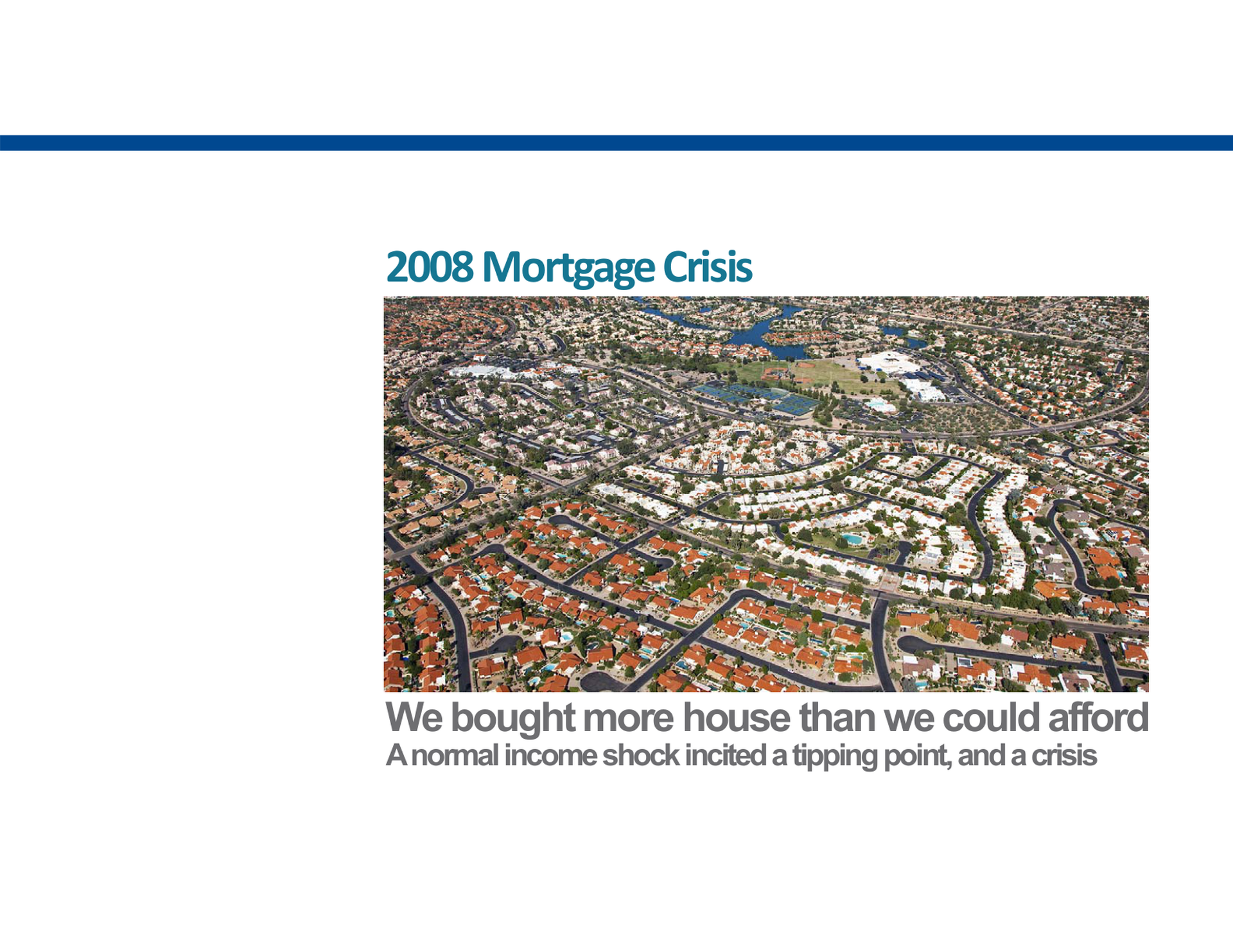
Unsustainable Housing Leverage:
The 2008 mortgage crisis was fundamentally driven by widespread over-leveraging as consumers consistently purchased homes far beyond their financial means. Easy access to credit and speculative buying created an artificial housing bubble. When economic conditions shifted, this excessive debt burden became completely unsustainable, ultimately triggering a cascading wave of defaults that shattered the real estate sector.
|
The Vulnerability Tipping Point:
A critical lesson of the collapse is how vulnerable highly leveraged systems are to minor disruptions. What began as a normal income shock rapidly escalated into a systemic tipping point. Because households lacked financial buffers, minor economic setbacks instantly compromised their ability to service debt, proving that structural fragility can amplify routine market fluctuations into catastrophic events.
|
Systemic Financial Contagion:
The localized mortgage defaults quickly mutated into a full-scale global financial crisis, exposing deep interconnectedness within modern banking. Securitized debt instruments spread toxic assets globally, causing liquidity to dry up and credit markets to freeze. This crisis demonstrated that individual lending decisions can ultimately destabilize national economies when regulatory frameworks fail to address systemic macroeconomic risks.
|