Aligning Strategic Opportunities:
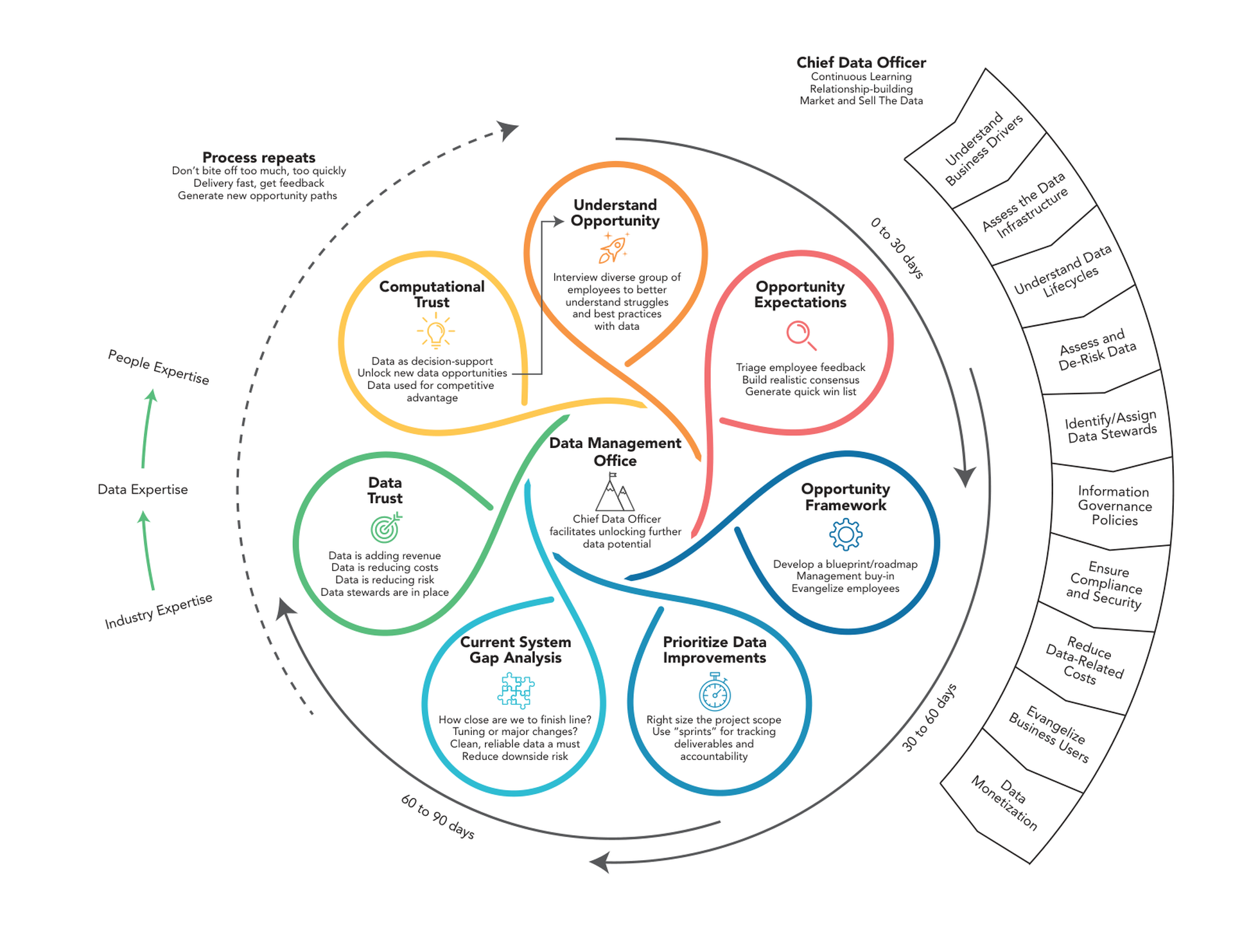
The initial phase of the data maturity journey focuses on aligning organizational leadership and identifying key business drivers. By conducting stakeholder interviews during the first thirty days, organizations can effectively triage feedback, establish realistic expectations, and map critical data lifecycles. This foundational blueprint builds cross-functional consensus and secures the essential management buy-in needed to evangelize upcoming initiatives.
|
Optimizing Infrastructure & Governance:
During the second phase, spanning thirty to sixty days, the strategy shifts toward tactical execution and rigorous risk mitigation. Organizations prioritize data improvements through agile sprints while conducting comprehensive gap analyses of existing systems. Establishing robust governance policies, assigning dedicated data stewards, and enforcing security compliance measures ensures a reliable infrastructure that reduces costs and minimizes risks.
|
Monetizing Trust & Intelligence:
In the final phase, spanning sixty to ninety days and beyond, organizations unlock real computational trust and commercial value. Data becomes a strategic decision support asset, driving new revenue streams and enabling sustainable monetization. Led by the Chief Data Officer, this continuous feedback loop repeats, building deep expertise to maintain long term competitive advantages through secure, reliable intelligence.
|