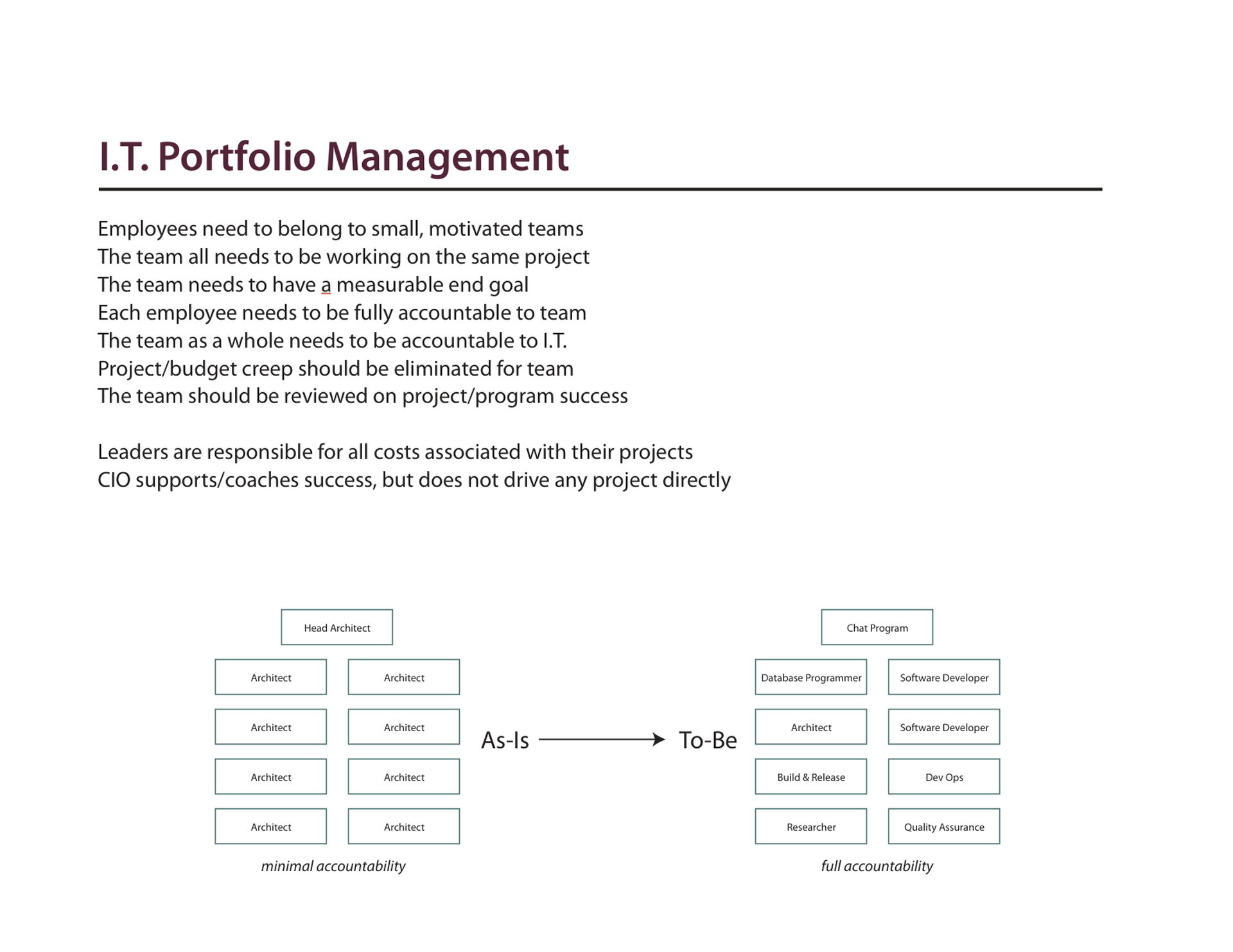
Agile Structural Evolution:
This transition shifts organizational structures from siloed, single-specialty pools to diverse, cross-functional teams focused on specific projects. By replacing a uniform group of architects with specialized roles like developers, DevOps, and quality assurance under unified initiatives, organizations foster immediate collaboration. This ensures that every necessary skill is embedded directly within the team to accelerate product delivery.
|
Decentralized Ownership Model:
Modern portfolio management demands a radical shift from minimal to full accountability at every level. Individual employees must be answerable to their peers, while teams remain collectively responsible to IT leadership. Under this model, project leaders assume complete ownership of financial costs, and the CIO transitions from an active driver to an empowering coach who supports strategic execution.
|
Value-Driven Performance Metric:
Organizations must eliminate budget creep and project drift by aligning small, motivated teams to single, measurable goals. Rather than evaluating activities, businesses must measure performance strictly by project and program success. This laser focus ensures high operational efficiency, directly connecting financial resources to defined business outcomes while motivating team members to take full responsibility for delivery.
|