Strategic Business Alignment:
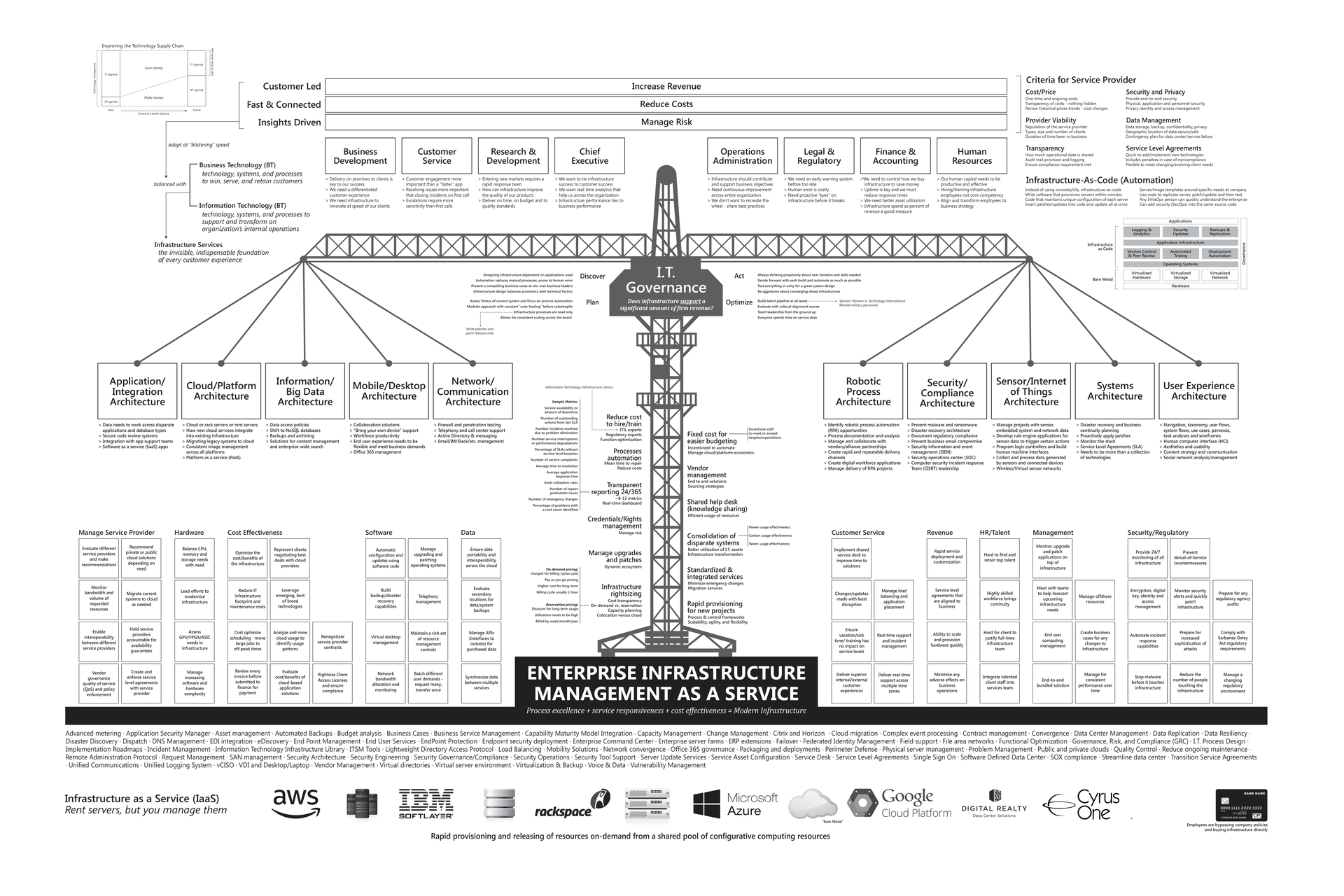
Modern IT governance must align directly with core business objectives to drive revenue, control costs, and mitigate risk. By bridging traditional Information Technology with agile Business Technology, organizations can empower department heads across finance, operations, and human resources. This strategic synergy ensures that infrastructure investment directly supports firm growth while fostering continuous, data-driven innovation.
|
Agile Architectural Automation:
Scaling enterprise operations requires a robust, multi-layered architectural framework encompassing cloud platforms, big data, network communications, and automated workflows. Integrating Infrastructure-as-Code enables teams to automate deployments safely, minimize manual errors, and elevate security monitoring. Through structured automation and IoT connectivity, organizations can maintain absolute system consistency while accelerating speed-to-market for digital products.
|
Optimized Service Management:
Managing modern infrastructure as a service demands strict cost-effectiveness, robust data compliance, and vendor accountability. Organizations must leverage top-tier providers like AWS, Azure, and Google Cloud to optimize workloads and reduce physical footprint. This holistic lifecycle management ensures high availability, reliable disaster recovery, and continuous regulatory adherence across all hybrid and multi-cloud environments.
|