Planetary Systems and Modeling:
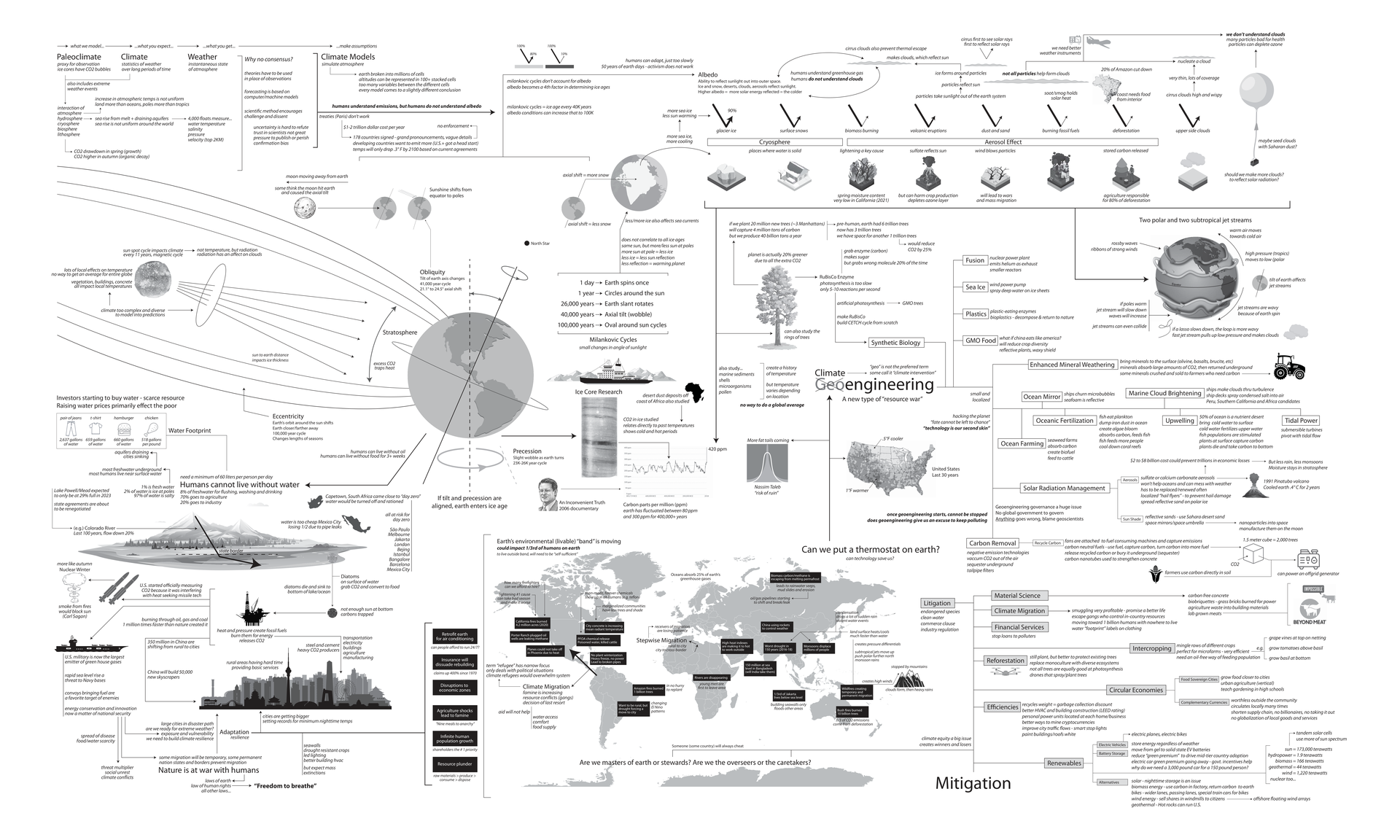
Understanding Earth's intricate planetary systems requires sophisticated climate modeling that bridges historic paleoclimate data with real-time atmospheric changes. Variations in solar distance, axial tilts, and orbital patterns combine with albedo fluctuations to drive long-term temperature shifts. These multifaceted natural cycles complicate predictive forecasting, revealing the delicate balance governing global ice reserves, ocean currents, and weather patterns.
|
Engineering a Cooler Planet:
Geoengineering represents a controversial frontier, offering technological interventions to actively manipulate global temperatures. Proposed solutions span carbon removal, solar radiation management, and marine cloud brightening to reflect sunlight. While these synthetic biological and chemical approaches aim to counter human-induced warming, they carry substantial risks, calling into question our governance capabilities and the unintended ecological consequences of playing planetary steward.
|
Adaptation and Social Resilience:
As environmental pressures intensify, humanity faces urgent socio-economic realignments, including forced migration, resource depletion, and infrastructure adaptation. Mitigation demands a systemic pivot toward circular economies, renewable energy grids, and material science innovations. Developing resilient urban landscapes and sustainable agricultural systems is critical to navigating the geopolitical stresses, legal battles, and financial risks of this unprecedented planetary transition.
|