Data and Algorithmic Foundations:
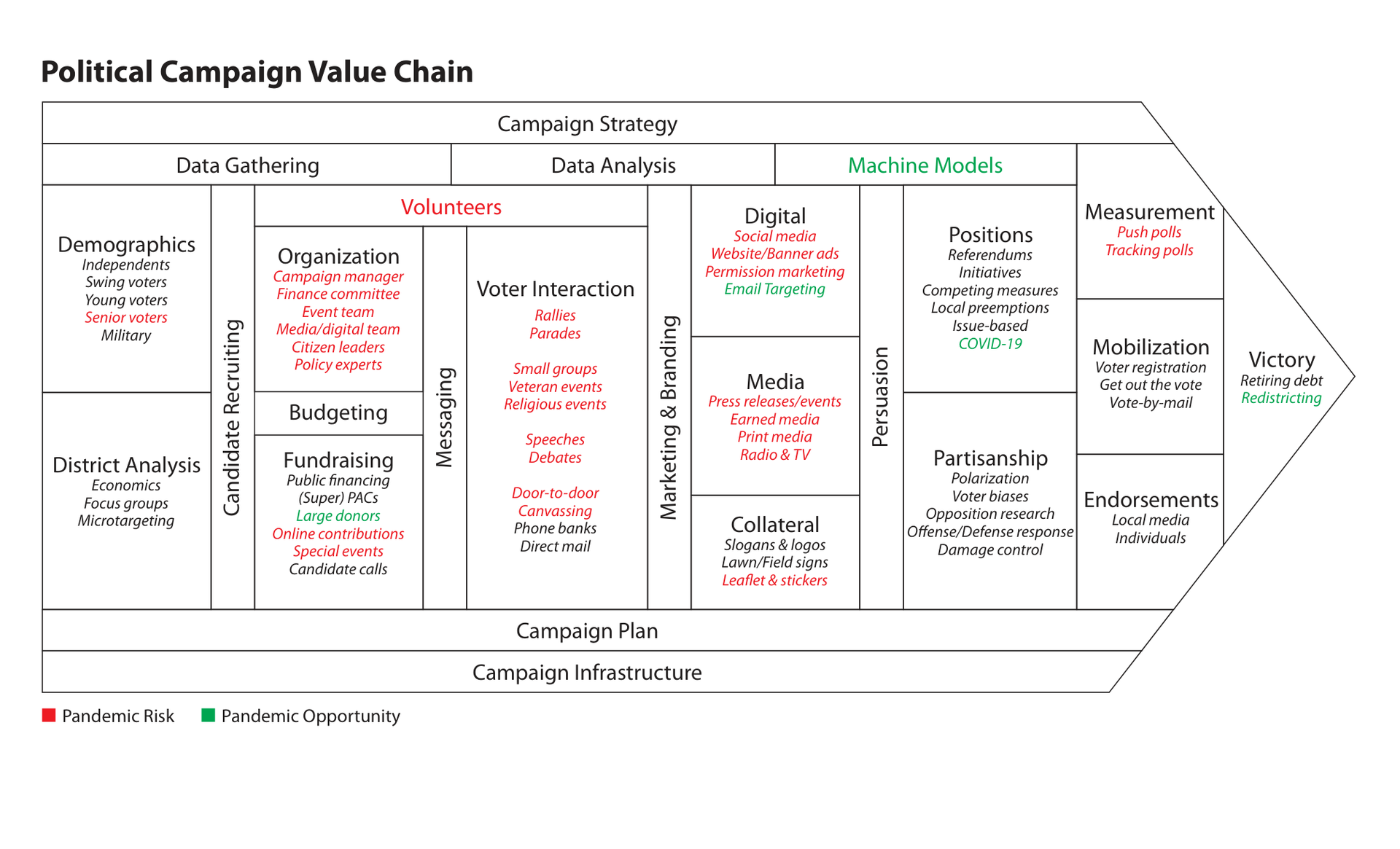
Modern political campaigns rely on a robust analytical foundation. By combining comprehensive demographic analysis with sophisticated machine learning models, strategists can accurately map competitive districts and segment voting blocs. This data-driven framework shapes the overall campaign infrastructure, enabling precise voter microtargeting and strategic candidate recruitment that guide all subsequent fundraising, organizational budgeting, and messaging decisions.
|
Navigating Operational Risks:
Successful campaign execution requires balancing complex field operations against sudden external disruptions. Traditional tactics like in-person rallies, volunteer canvassing, and physical media events face severe pandemic risks. To survive, organizations must rapidly pivot toward digital communication channels, targeted email marketing, and online fundraising to maintain strong volunteer alignment and consistent message delivery across diverse demographics.
|
Strategic Persuasion to Victory:
The final phase of the campaign value chain translates voter engagement into election victories. Campaigns navigate highly partisan environments by tailoring specific issue-based positions and countering opposition research. Leveraging polling data helps measure shifting sentiment, while optimized mobilization strategies, such as vote-by-mail initiatives and local endorsements, ultimately drive turnout, secure victory, and facilitate post-election redistricting opportunities.
|