Optimizing the Data Foundation:
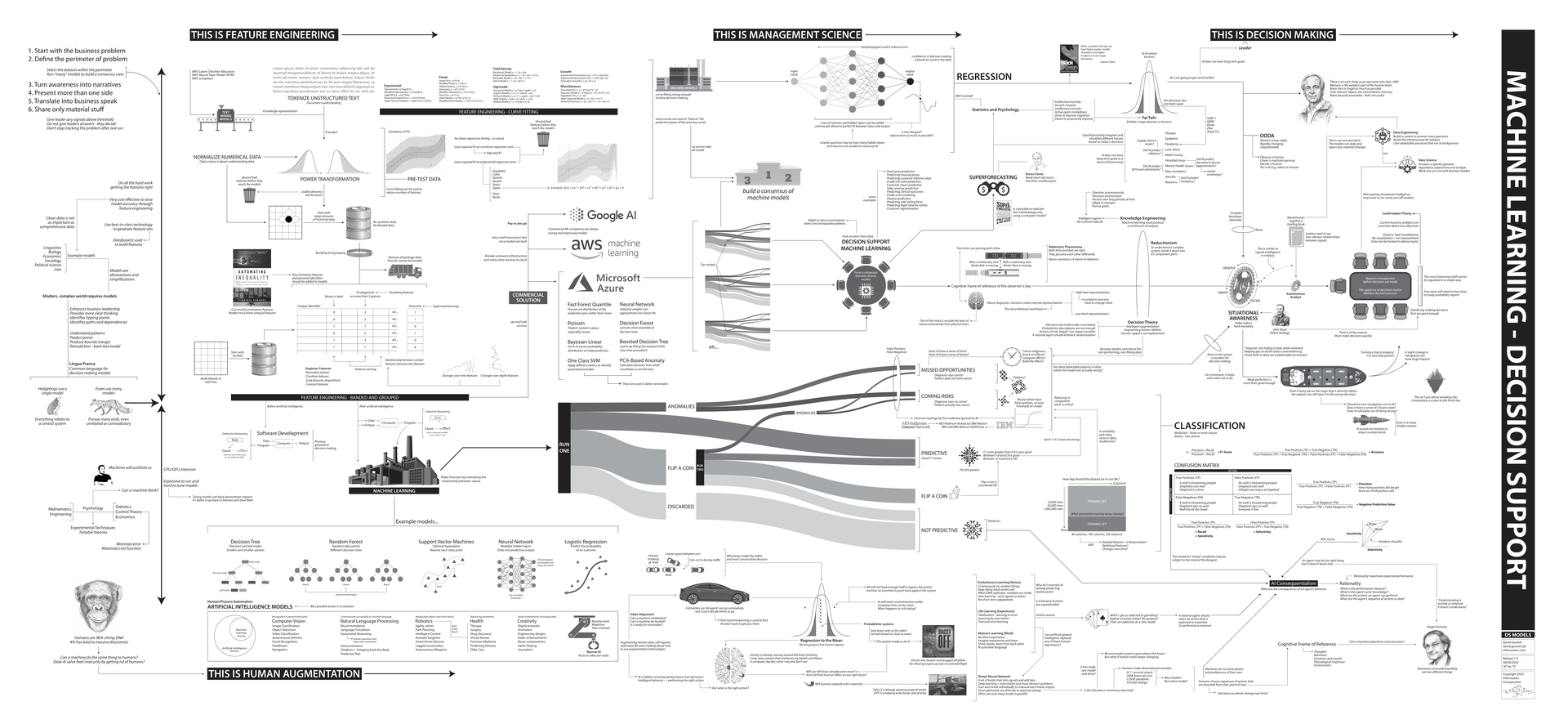
Successful machine learning initiatives begin with robust feature engineering and meticulous data preparation. By normalizing numerical datasets, transforming power curves, and structuring complex text, organizations convert raw information into predictive power. This critical foundational stage ensures that downstream algorithms operate on clean, high quality signals, thereby mitigating noise and establishing a highly reliable baseline for model training.
|
Synergistic Modeling and Science:
Management science bridges the gap between raw statistical modeling and actionable business decisions. By employing regression, classification, and anomaly detection, businesses can systematically evaluate risks and project outcomes. Building a consensus among diverse machine models allows leaders to address complex business problems with high precision, transforming statistical outputs into reliable, objective frameworks for strategic corporate initiatives.
|
Augmented Cognition and Ethics:
The ultimate value of artificial intelligence lies in human augmentation, where advanced algorithms enhance human capabilities rather than replace them. Integrating machine learning with cognitive frameworks allows organizations to combine computational speed with human intuition and ethical reasoning. This symbiotic relationship fosters superior situational awareness, enabling leaders to navigate complex decision environments while remaining aligned with organizational values.
|