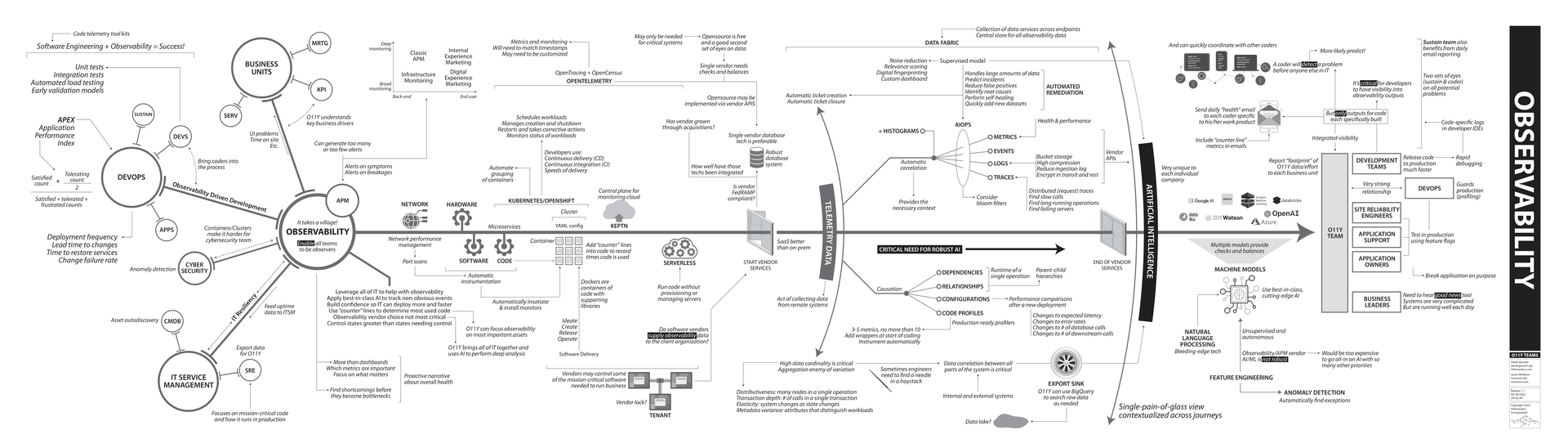
Unified Cultural Alignment:
Modern enterprise observability breaks down silos by unifying DevOps, cybersecurity, IT service management, and business units under a shared operational standard. By fostering collaborative, observability-driven development pipelines, organizations empower diverse cross-functional teams to proactively detect anomalies, measure performance impact, and accelerate deployment frequency. Ultimately, establishing this shared culture ensures total operational alignment and systemic resilience.
|
Robust Telemetry Pipelines:
Managing complex telemetry data requires ingestion pipelines that handle metrics, events, logs, and traces at scale. Leveraging open-source frameworks like OpenTelemetry alongside structured databases, enterprises can capture high-cardinality data across serverless architectures and Kubernetes clusters. Standardizing this data flow prevents vendor lock-in and creates a clean data fabric essential for modern cloud environments.
|
Intelligent AIOps Remediation:
Integrating artificial intelligence and advanced machine learning into observability platforms enables predictive automated remediation. By deploying cutting-edge anomaly detection and natural language processing models, systems can rapidly resolve incidents, perform self-healing, and reduce costly noise. This transition to AI-driven insights equips development, support, and business teams with unified visibility to make faster, smarter operational decisions.
|