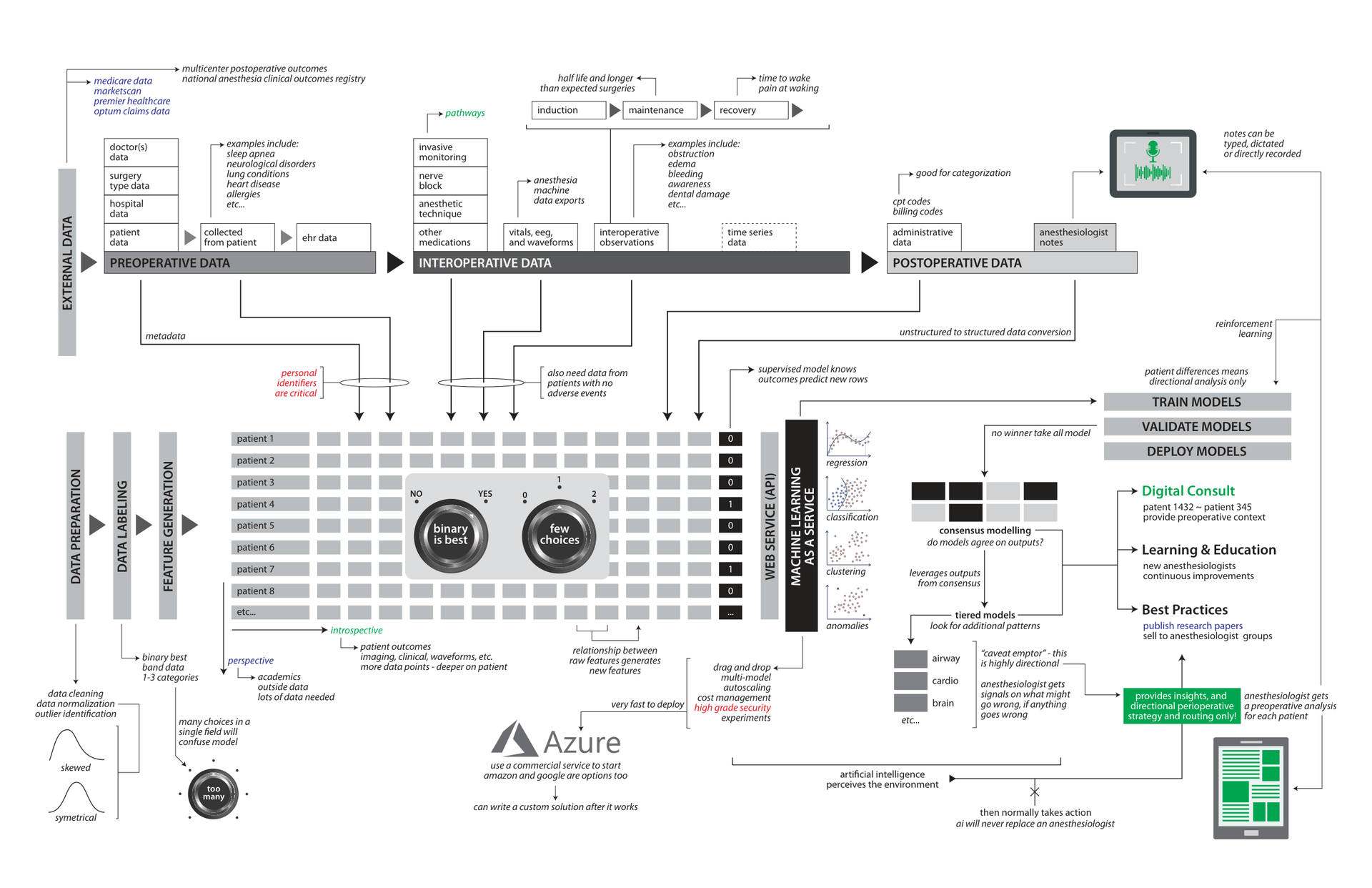
End-to-End Clinical Data Pipelines:
This architecture outlines a comprehensive data pipeline capturing preoperative, interoperative, and postoperative clinical insights. By standardizing structured EHR records, real-time waveform monitors, and unstructured clinical notes, healthcare organizations can eliminate fragmented data silos. Robust preprocessing, outlier removal, and precise feature labeling prepare high-fidelity clinical datasets to power predictive models that significantly enhance patient safety.
|
Scalable Cloud-Based ML Architectures:
Leveraging enterprise cloud-based platforms like Azure, clinical institutions can deploy robust Machine Learning as a Service models. Through regression, classification, and anomaly detection APIs, the system automates predictive risk modeling. Implementing consensus and tiered modeling strategies allows diverse algorithms to validate findings collectively, ensuring high-grade security, rapid deployment, and optimized clinical resource management.
|
Augmented Decision Support Systems:
The ultimate goal of this artificial intelligence ecosystem is clinical decision support, not doctor replacement. By providing real-time, directional insights and preoperative analysis, AI acts as a sophisticated digital consultant. This augments anesthesiologists' situational awareness, supports continuous medical education, and defines clinical best practices while ensuring that human clinicians remain the final authority on critical decisions.
|