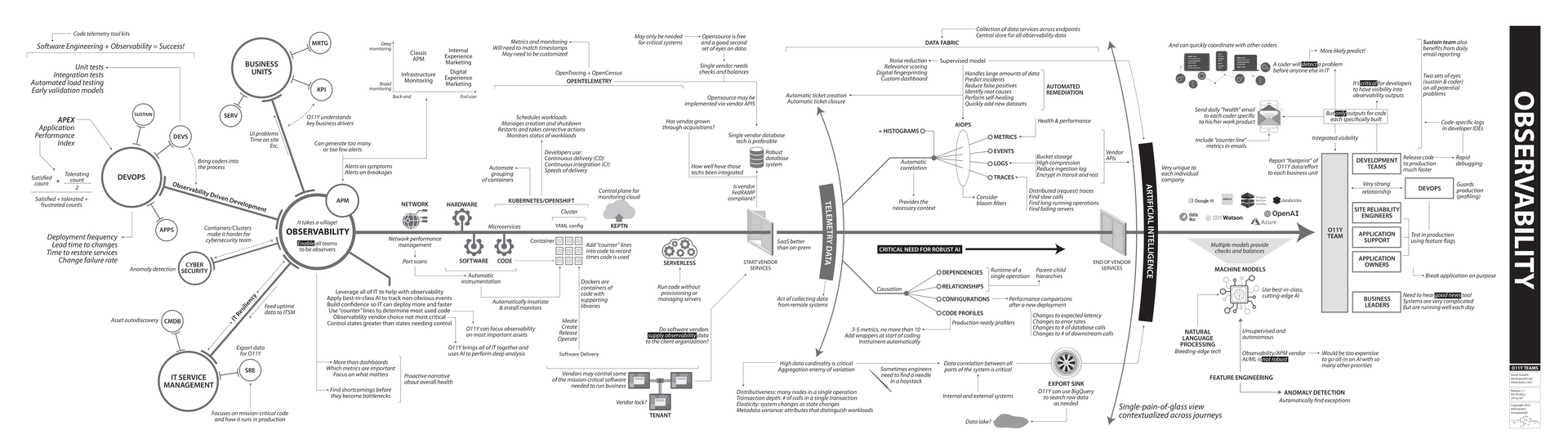
Unified Observability Ecosystem:
Successful digital ecosystems shift from traditional monitoring to collaborative, observability-driven development. By integrating developers, security operations, and business units into a shared telemetry culture, organizations democratize key insights. This collaborative structure empowers all teams to actively monitor system health, accelerate software deployment, reduce downtime, and align technical performance directly with core business KPIs.
|
Automated Telemetry Pipeline:
Managing complex cloud-native architectures requires robust telemetry pipelines that seamlessly ingest diverse data sources, including metrics, events, logs, and traces. By standardizing open-source frameworks like OpenTelemetry across microservices, Kubernetes, and serverless infrastructures, organizations can eliminate vendor lock-in. This cohesive data fabric provides the deep, contextual visibility necessary to understand high-cardinality transactions across distributed systems.
|
AI-Powered Intelligent Operations:
Integrating artificial intelligence and machine learning into the telemetry lifecycle transforms passive analysis into proactive remediation. Through advanced anomaly detection, natural language processing, and automated root-cause analysis, AIOps platforms filter through overwhelming operational noise. This intelligence empowers site reliability engineers to resolve issues before they impact users, driving automated incident resolution and continuous performance optimization.
|