Developer-Centric Observability:
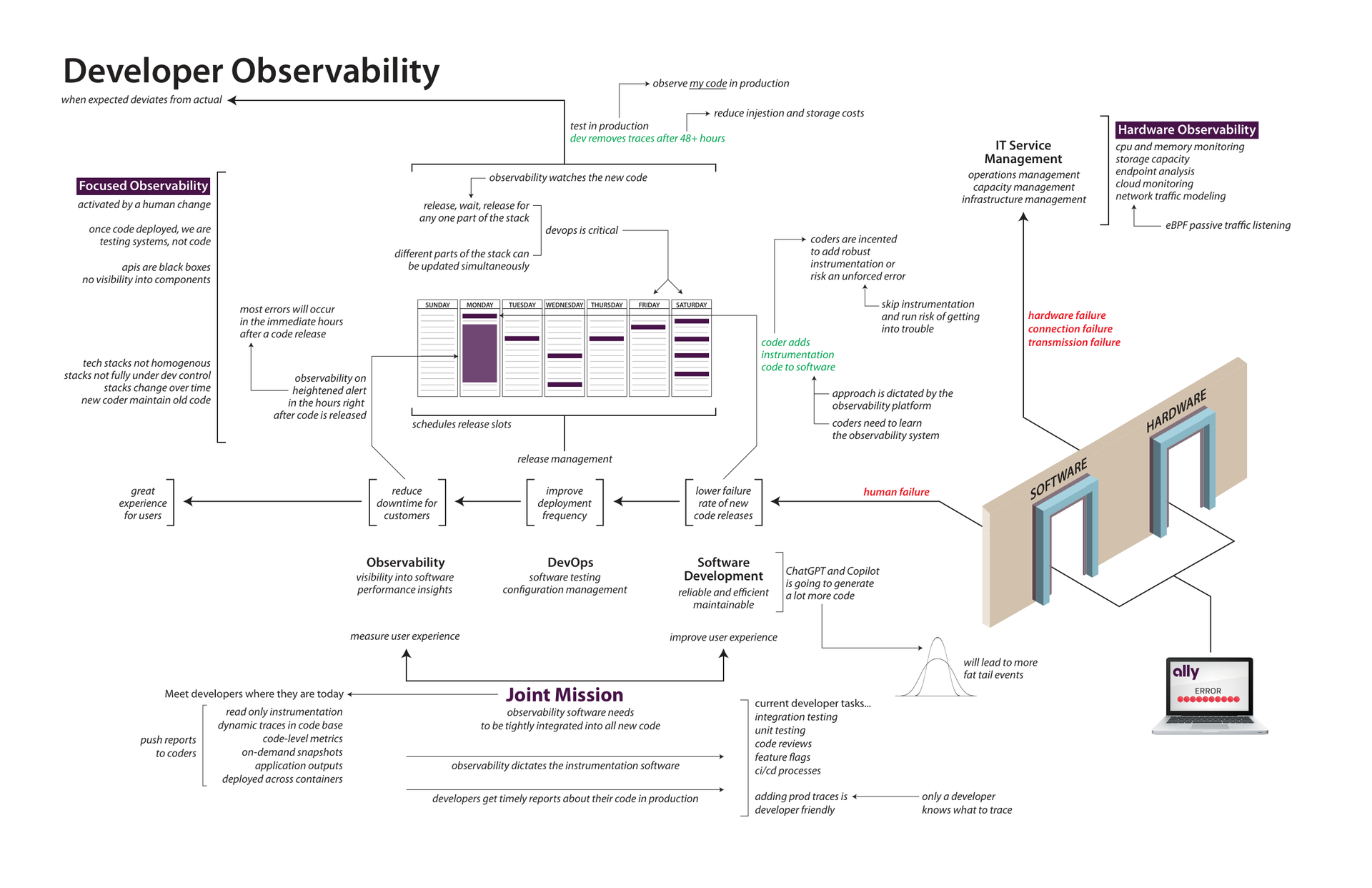
To improve user experience, observability must integrate tightly into the development lifecycle. Meeting developers where they are means providing read-only instrumentation, dynamic traces, and code-level metrics directly inside their workflows. By pushing timely production reports directly to coders, teams can proactively resolve issues before they compromise the user experience or disrupt critical software systems.
|
Optimizing Release and Deployment:
Modern release management demands robust deployment schedules to systematically lower failure rates of new code. By focusing observability efforts immediately following a release, DevOps teams can significantly improve deployment frequency and minimize customer downtime. Implementing automated instrumentation ensures developers detect anomalies instantly, transforming deployment pipelines from high-risk events into predictable, high-performing operational routines.
|
Isolating Software and Hardware Failures:
Scaling modern IT architectures requires isolating software errors from physical hardware failures. While hardware observability monitors physical infrastructure like memory and networks, software observability tackles complex code defects and integration issues. This distinction grows critical as generative AI tools write more code, increasing the frequency of tail-risk anomalies that bypass traditional hardware-level monitoring solutions.
|