Synthesizing Raw Security Inputs:
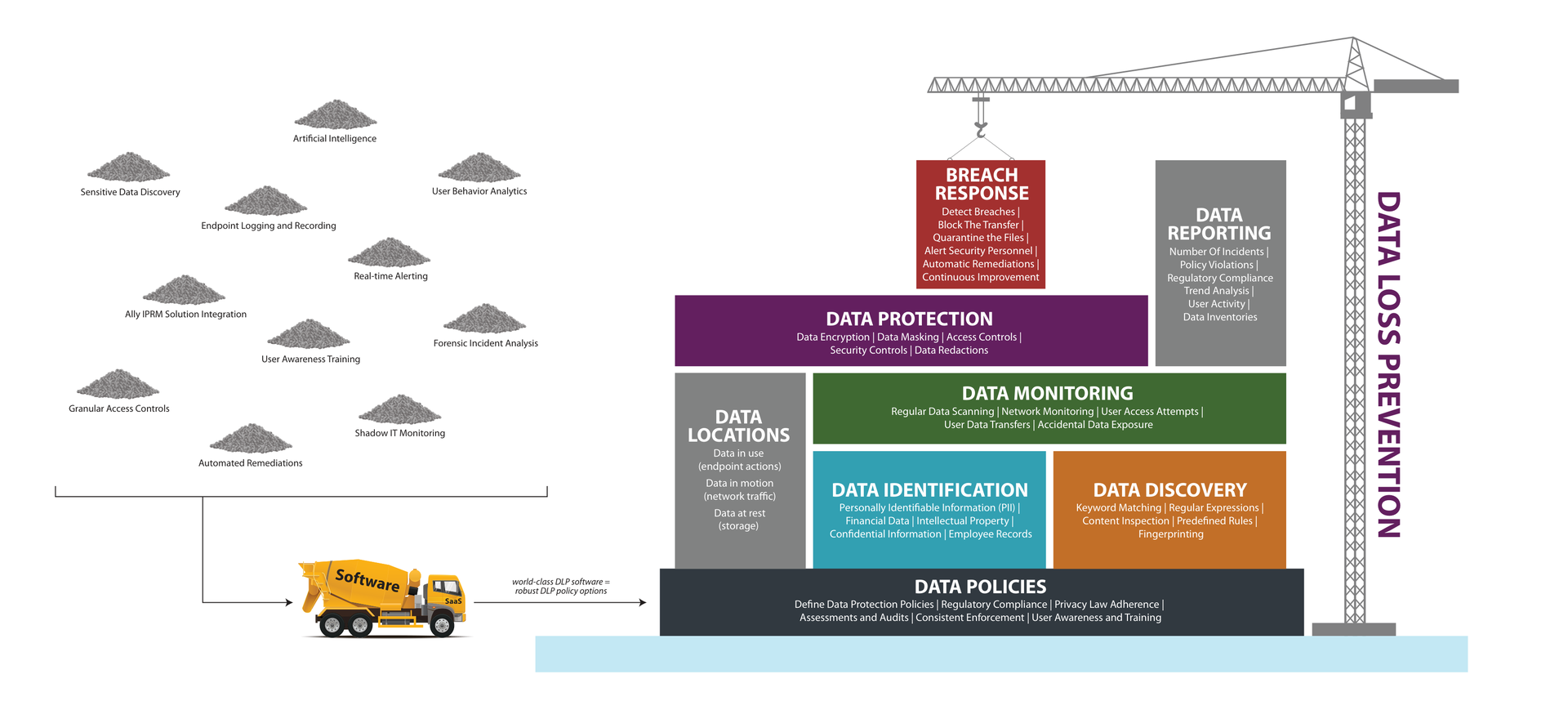
The left side of the framework illustrates how disparate, unstructured capabilities like artificial intelligence, shadow IT monitoring, and user awareness training serve as raw material. When processed through advanced SaaS-based software, these raw inputs are transformed into structured, solid building blocks, establishing a highly integrated and systematic approach to comprehensive corporate data protection.
|
Foundational Policies and Identification:
A resilient security architecture relies on a strong foundation of data policies, regulatory compliance, and consistent enforcement. Above this base, organizations must map data locations across use, motion, and rest, while accurately identifying sensitive assets like PII and intellectual property. This structural approach ensures that all subsequent protective layers are built upon clear visibility and alignment.
|
Proactive Defense and Incident Response:
The pinnacle of the framework focuses on active monitoring and real-time protection, utilizing encryption, access controls, and masking. Coupled with structured breach response protocols and comprehensive compliance reporting, this layer ensures operational resilience. It allows organizations to swiftly detect threats, automate remediation, quarantine compromised files, and maintain continuous oversight to mitigate severe data exposure risks.
|