Seamless Lifecycle Integration:
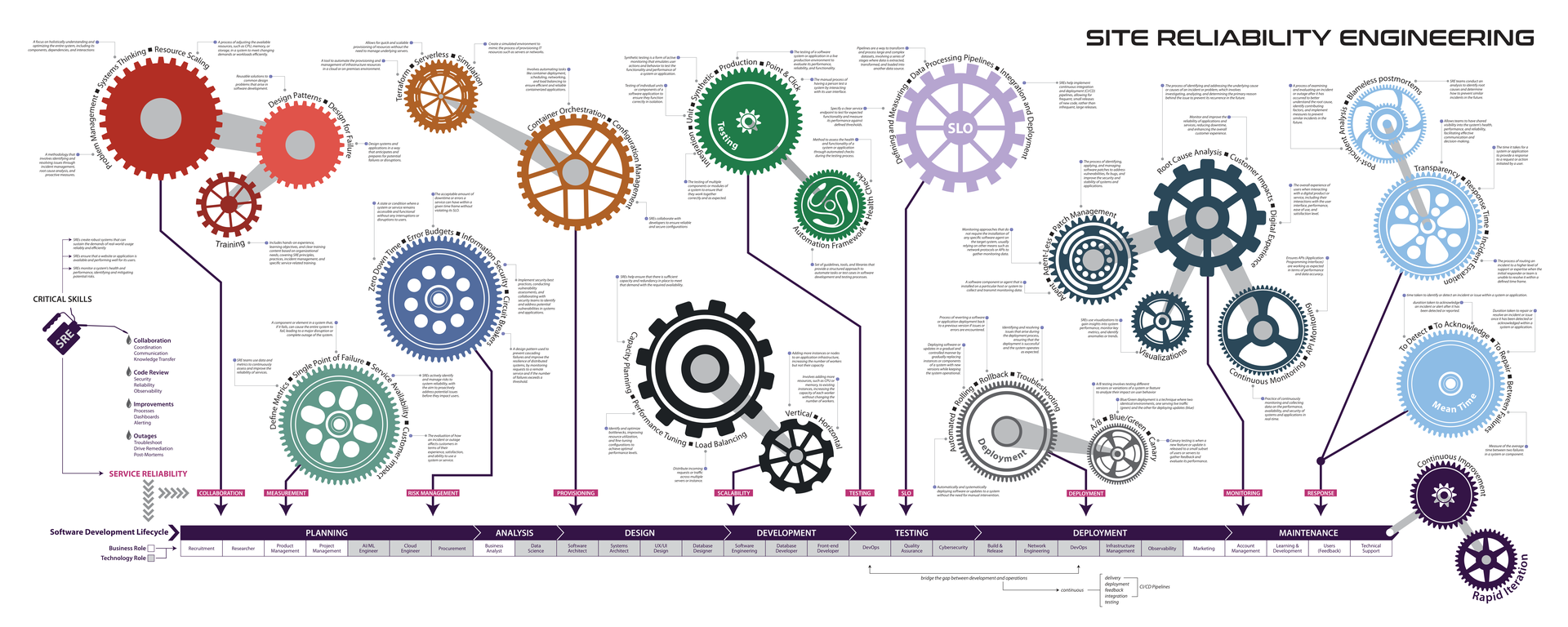
Site Reliability Engineering bridges the traditional divide between software development and operations. By embedding SRE principles across the entire development lifecycle, organizations establish shared ownership. Cultivating a blameless culture alongside strategic training ensures systems are resilient, scalable, and inherently optimized to support business goals while mitigating the risk of critical system failures.
|
Automation and Architecture:
SRE drives operational efficiency through automated infrastructure management, container orchestration, and robust deployment strategies. Utilizing tools like Terraform, serverless architectures, and advanced load balancing mitigates single points of failure. This systematic approach guarantees high availability and zero downtime, enabling rapid software releases while maintaining strict adherence to robust information security and compliance standards.
|
Data-Driven Observability:
Defining clear service level objectives and implementing continuous monitoring are essential to protecting the user experience. By measuring actual customer impact, tracking key performance indicators, and conducting thorough postmortems, teams can accelerate issue resolution. This data driven approach minimizes mean time to repair and establishes a powerful feedback loop for rapid and continuous product improvement.
|