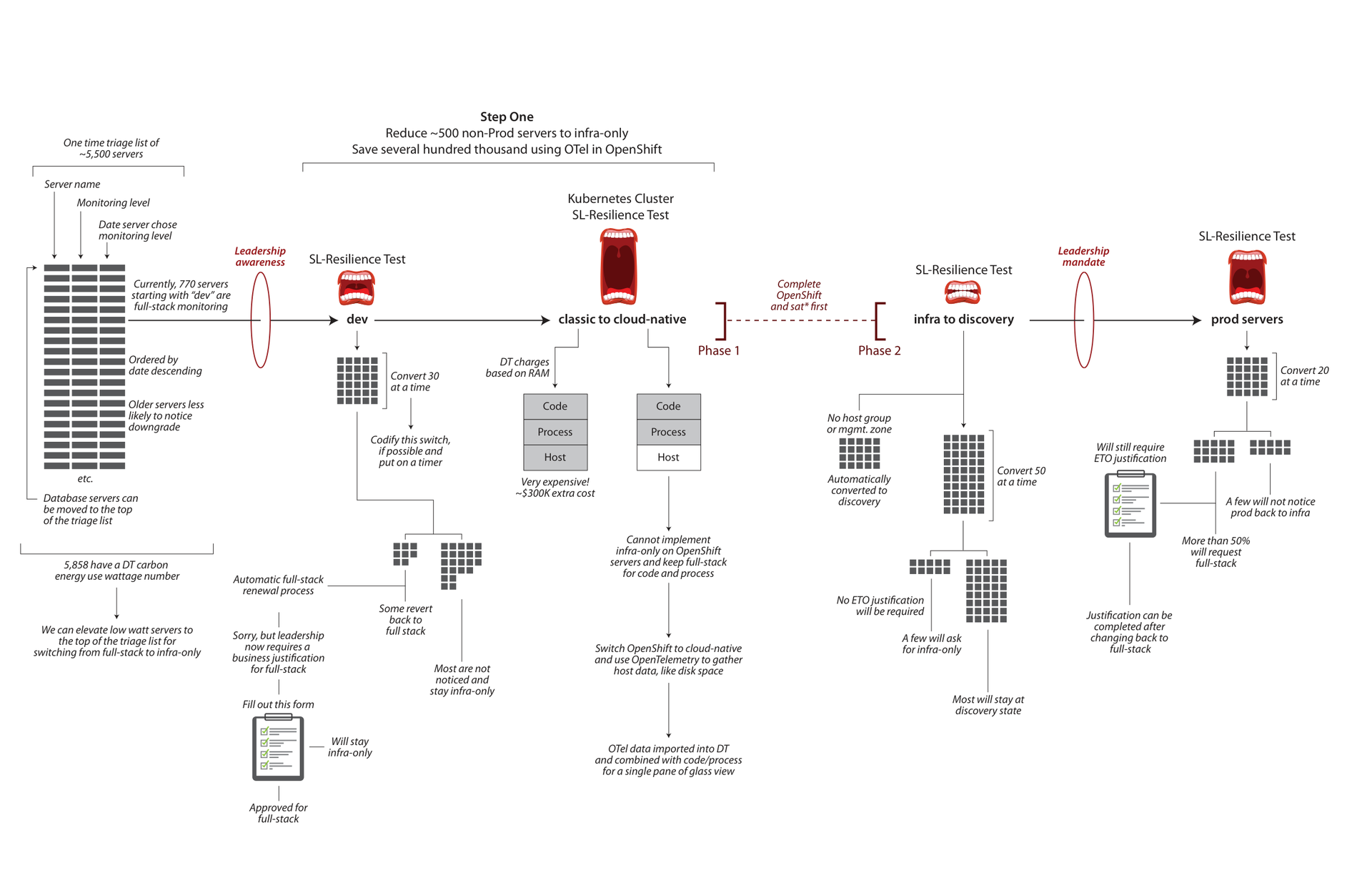
Targeted Cost Rationalization:
The organization is initiating a major cost-reduction strategy by systematically downgrading over five thousand servers from expensive full-stack monitoring to basic infrastructure-only levels. By targeting non-production and development environments first, this methodical triage minimizes operational disruption while generating substantial immediate savings, specifically addressing high licensing fees associated with unnecessary resource-intensive monitoring configurations across legacy servers.
|
Cloud-Native Architecture Shift:
To mitigate high RAM-based agent charges, the technical roadmap mandates transitioning OpenShift clusters from classic to cloud-native architectures. By integrating open-source OpenTelemetry to capture vital host data and merging it back into a unified dashboard, the business bypasses proprietary agent costs while maintaining deep system visibility and ensuring high platform resilience during the migration.
|
Governed Phased Deployment:
Execution is structured into two disciplined phases driven by leadership awareness and strict mandates. While non-production environments transition with automated tools and minimal justification, production changes require rigorous approval workflows. This balanced approach ensures that critical applications maintain appropriate performance coverage while enforcing organizational accountability and driving widespread compliance across all infrastructure teams.
|