Aligning Lender Incentives:
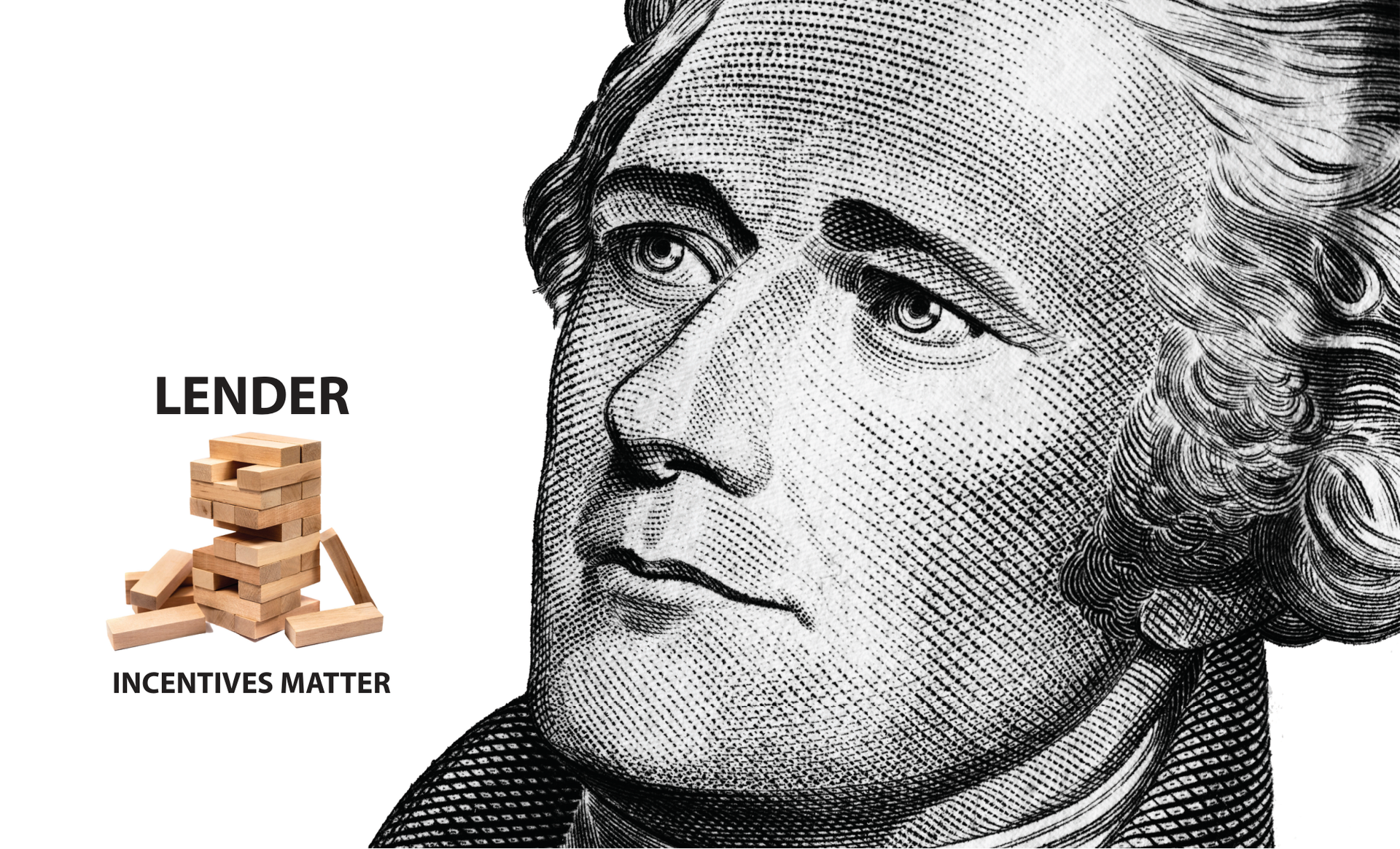
Incentives drive behavior across the financial ecosystem, acting as the bedrock of lending decisions. When lender motivations are misaligned with overall stability, systemic risk escalates rapidly. To prevent structural collapse, institutions must design robust compensation structures and risk retention policies that align short term gains with sustainable, long term credit health and transparent risk sharing models.
|
Mitigating Systemic Collapse:
The precarious wooden tower illustrates how easily systemic foundations can crumble under pressure. Unregulated lending practices and unstable credit structures create vulnerability, threatening the entire financial architecture. Analysts must proactively monitor leverage ratios and liquidity metrics to identify hidden weaknesses. Mitigating these structural vulnerabilities requires continuous stress testing and a proactive approach to risk management.
|
Hamiltonian Economic Legacy:
Alexander Hamilton pioneered the central structures of American finance, establishing a legacy of strong public credit and national banking. Modern monetary policy still reflects his core principles of centralized authority and fiscal responsibility. Today, the balance between innovation and regulation remains critical, as historical frameworks guide our efforts to stabilize volatile markets and secure long term prosperity.
|